Tuesday, January 1, 2019

Making Inferences: What's My Teacher Been Up To?

Ready or not...here we go! 
The calendar has been turned to January. It's time to think about getting back into the classroom. 
I will begin 2018 by teaching the very important, but difficult reading skill of making inferences. 
This is a tricky skill and I know my kids (and myself) will be struggling to deal with being back at school after our break. A couple of years ago I came up with an introductory lesson for the skill of Making Inferences. It will be perfect for our first day back. It is a fun activity that I call, " What's My Teacher Been Up To?"  It is a great one to use on the first week back from winter break, but can also be used any time of the year.  
I prep and prepare a number of "evidence" bags that contain clues about what I spent my Winter break doing. 


Inside each bag are clues that tell one of the things I did during my days off.  Students work in a small group to evaluate the clues and connect them to make an inference. 


I added multiple clues to each bag. One had a ticket to a museum I visited, a map of the metro we took to get there, and a photograph of my son in front of one of the exhibits. 


Receipts make good clues.  They often include a location plus a date and time. 
I included one for the bowling we did. Students could find clues and make inferences about the number of people who played based on the shoes we rented. 


Students recorded clues and background knowledge on a recording sheet and made inferences. 


Working in a small group helped them to practice 21st Century Skills such as communication and collaboration.  Each group got a chance to share their inferences and were able to give each other feedback. 


It was a great way to introduce a tough skill in a concrete and fun way. 
Choosing high interest activities helps my students and myself get back into our school routine. 
I'm looking forward to hearing and seeing my students work through the clues. 
So, if you are dreading going back, think of a way to make it fun!

I have put other "Making Inferences" lessons and materials together and have added them to my TPT Store.  You can click the link below to check it out. 


What are some of the activities you plan on your first day back from break?
Please share!

Monday, December 31, 2018

How I Encourage Positive Behavior While Reviewing Math Skills

Are you dreading gearing up for your first day back after winter break?
If your kids are like mine, they will need some encouragement to get back into the routines.
We will have to review rules and what it means to be respectful, responsible and productive all over again.
My plan is to reinforce positive behaviors with a classroom incentive that will also help me reinforce math measurement skills.

In my county and state, I am responsible for teaching students measurement concepts. My third graders need to learn about both standard and metric units of length, weight, and capacity. That includes inches, feet, yards, centimeters, meters, cups, pints, quarts, gallons, milliliters, liters, ounces, pounds, grams and kilograms!  
Wow, that's a lot of information to keep straight in their little brains.  
I can totally understand why my students get these units confused!
We only get a matter of weeks to cover our measurement unit....certainly NOT enough time. 


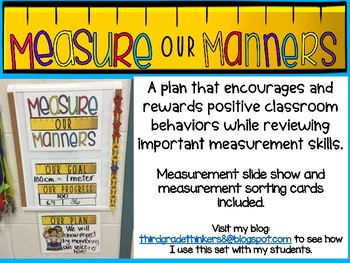
In an effort to figure out a way I could review and reinforce these measurement concepts on an ongoing basis, I came up with "Measuring our Manners". 
.  
With this plan, I got to monitor, encourage and reward my students' positive classroom behaviors while reinforcing measurement concepts.  I love it when I can maximize my teaching time and integrate learning. This did just that, and my kids were very motivated and engaged throughout it all. 

Here's how it worked. 

First I created a chart that we would hang in our classroom.  It included an area to record our goal, plan and progress. I laminated the cards so we could use a dry erase marker to write on it and I hung it in the classroom.

Our first "Measure Our Manners" goal was to build a chain that measured one meter in length. 
I explained the goal to my students and we reviewed how long a meter was.  I have a slide show that I use with visuals of all the measurement units. We would refer to that a lot.  
Students would show me how long the chain would be....their body benchmark is their arms opened wide.  Then I explained that to build the chain, they would need to use their positive behaviors. 
We are a PBIS school and we focus on being productive, respectful and responsible. 
Measuring our Manners is a whole class behavior tracking plan, so students would need to work as a team to remind each other of how everyone should be behaving.  Students would be rewarded with a link to add to the chain as I witnessed positive behavior in action.   Before beginning, we also talked about what problems we may have along the way.  They recognized that they needed to work on their voice level and so we made that our goal. We discussed how we could appropriately remind each other about using a lower level voice if needed. 

We added a part/part/whole box to the chart to help us keep track of our goal, how far we got, and how much further we had to go.  
Then we were ready to measure our manners!

Here is what our chart looked like after awhile.  

Students could earn a link for a positive morning session, lunch time, and afternoon session. I would also add a link for other random acts of goodness during the day such as if they received a compliment from another teacher or if the class worked extra hard on a school job. 
We measured the chain once a day, either at the end or beginning of the day. A student would get picked to figure out the new numbers for the part/part/whole box. 
That was also the time we reviewed the measurement unit. 


When we met our goal and the chain measured one meter, we would get to vote on a class celebration!  We kept these simple,  like extra recess, bring a stuffed animal to class, eat lunch outside, etc.  My kids always had lots of ideas.  Once they even chose to have nap time! 
I was certainly on board with that one!!!

After the first goal was reached, we planned another one.  
We ended up measuring our manners using all the measurement units.
Kids never got tired of it!

We used unifix cubes to build a yard. 


We got out our balance scale to measure 100 grams. 


We traded out gram weights for ten or twenty grams along the way. 
Our toucan kept reminding us that "you can" do it!


We even measured our manners using capacity. 
Each good behavior was a cup of water added to our gallon jug.  


This ended up being a review of science too.  After spring break, we came back to find that we had less water in the jug then when we left.  There was all kinds of speculation...NO, no one came into the classroom and drank it! 
We finally figured out that some of the water had evaporated!
Good review of the water cycle!


There are other ways to measure manners too....You could add pennies to a jar until you reached a dollar.  How about adding degrees on a thermometer until you reach a certain temperature.  
You will find lots of opportunities for meaningful math talk. 
Students engaged in lots of good math discussions through using this system. 
We answered questions like:
 If each link is 2 centimeters long, how many days would it take for us to reach our goal? 
How many more cups do we need to make a gallon? 

I used this system to reward my class for positive behaviors, but also would hold them accountable for negative ones too. There were times when the class had to subtract instead of add units. 
I found that kids began to hold kids accountable. No one wanted to be the one to cause us to take away a cup, a gram or a link.  Situations like this created opportunities for us to discuss ways we could help and support each other in using good behavior.  

I've added this file to my TPT store. 
It includes the "Measuring our Manners" printables, a measurement unit slide show and measurement sorting cards.
Click the link below if interested: 

Measure Our Manners: A Behavior Management Plan Using Metric and Standard Units


Are you looking for a way to teach the metric system?
I explain my approach in a blog post.
Check this link out to read all about it...

Teaching the Metric System

Wednesday, December 12, 2018

Easy Personalized Christmas Ornaments for Kids to Make


It's that time of the year!  
Some call it the season of peace, but as teachers we know it is really the season of panic.
Christmas is right around the corner. 
There is still so much to do and figure out....crafts, parties, presents, the list goes on and on. 
One thing that is now thankfully checked off my list is the question of what my kids will make for this year's ornament. 

I thought I'd share two quick, easy and relatively inexpensive ornaments you can make with your kiddos.  My favorite ones are personalized in some way.  These two fit that bill. 

The first one is the Fingerprint Christmas Tree ornament. 

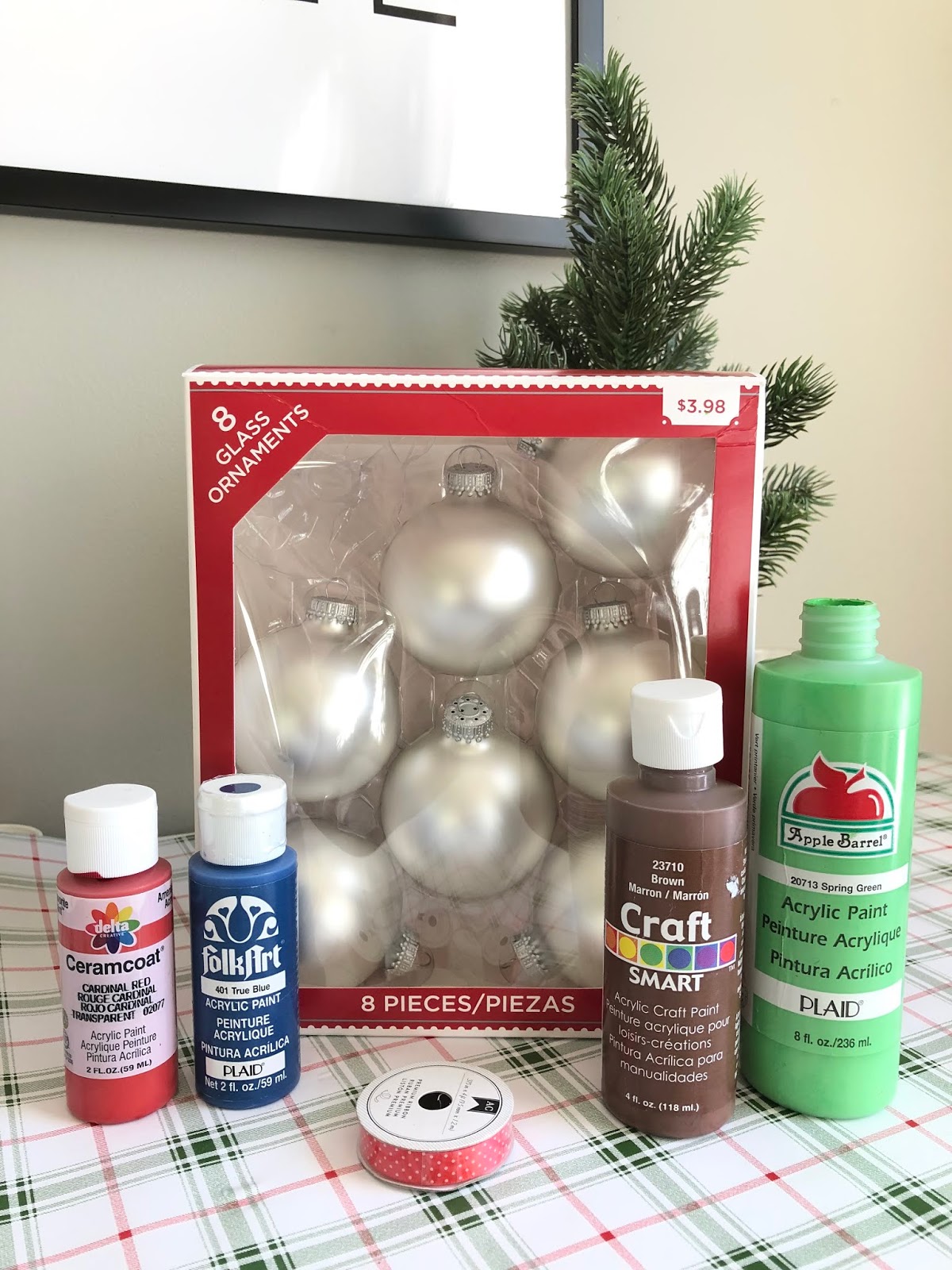
Here is what you need: 
White or Silver Ornaments ( I got mine from Walmart)
Acrylic Paint.. (Also need yellow paint for the star)
Ribbon


The ornament tray makes a great holder for this craft. 
It keeps the ornament in steady position when your child is working with it. 


Older kids can print this themselves. 
Step One: 
 Dip the child's  finger in the paint and then make a line of fingerprints to form a tree. 
I help guide my third graders with this step. 

Continue adding fingerprints until you have a tree!


Step Two: 
After forming the tree, use brown on a finger for the tree trunk and yellow for the star. 


You can stop there, or have students add dots of color around the tree. 
Don't forget to add the name and date with a Sharpie after the ornament is dried. 


Step Three: 
Add a bow for a festive final touch. 

This second ornament is a favorite of mine. 
So quick, easy!


Here's what you need: 
Wooden Ornaments
Modge Podge and brush
Photograph
Ribbon


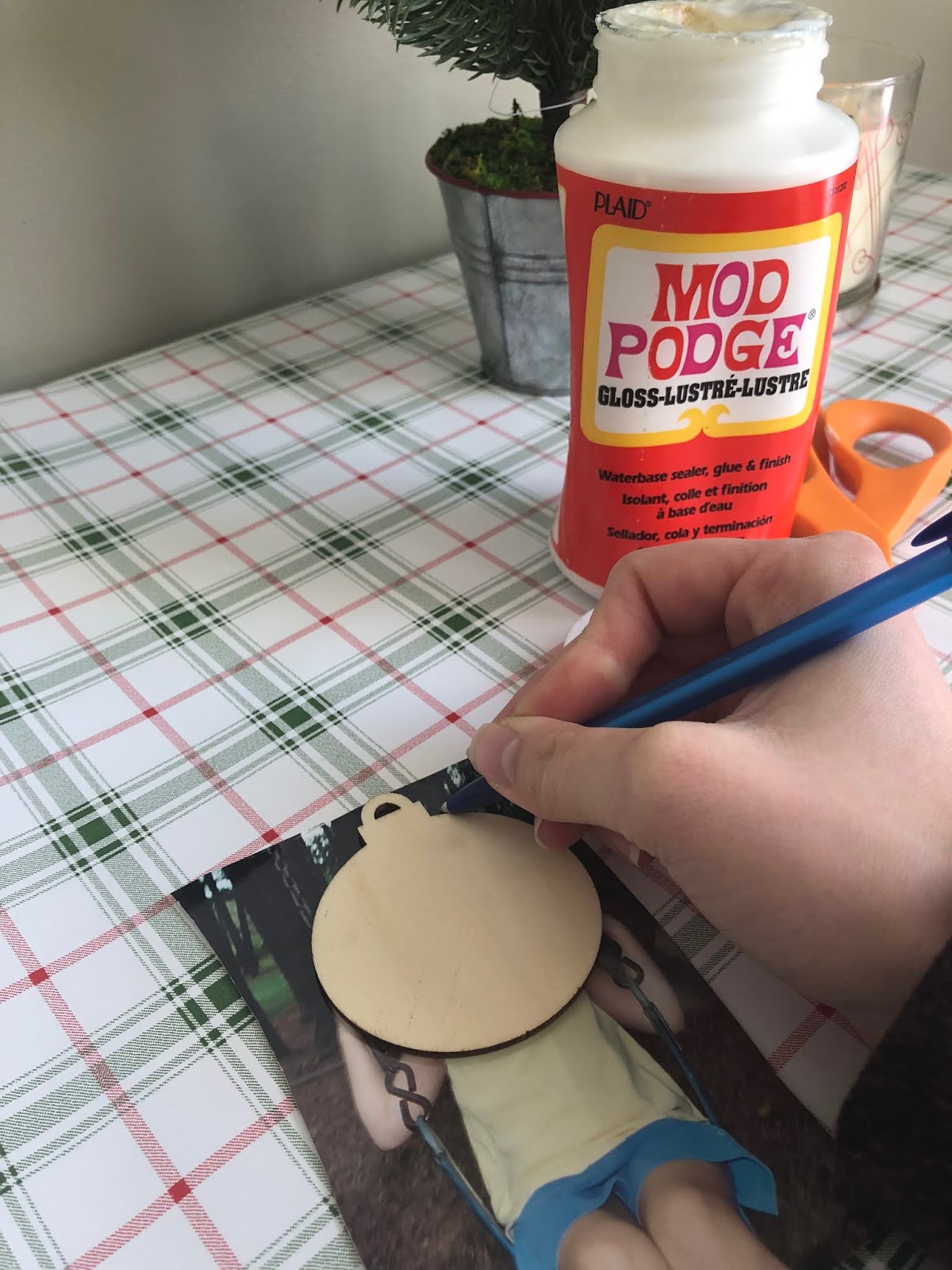
Step One: Position the ornament over the photograph you are using.
Trace to form the shape of the ornament.


Step Two: Cut out the shape of the circle.


Step Three: Paint the Modge Podge over the wooden ornament.
Think of it as glue.


Step Four: Press the photograph onto the ornament.


Step Five: Use a brush to add more Modge Podge to the top of the photograph.
Don't worry....this will dry clear!


Add ribbon, bells, etc to decorate it.
Add the year using a Sharpie...then it's ready to hang on a tree!


My kids LOVE crafting and I love spending time creating right along with them.
Do you have a holiday craft that you like making?
Would love to hear!
Comment below or email at youngdor8@gmail.com


Sunday, November 25, 2018

Giving Thanks


Hello Friends, 
Did you get your fill of Thanksgiving goodness? 
It sounds cliche to say that the best part of my break was the time spent with my family, but as a soon to be empty nester, those words really do speak the truth. 

As teachers, we often feel conflicted when it comes to time management. 
We want to spend time preparing and planning for our students and our days in the classroom, but at the same time, we owe it to our family to be present for them. 


As teachers, are we too busy for our own good? 
I believe that God does not call us to be "busy".  He calls us to be "fruitful". 
What are we spending our time on? Does it show God's love? Does it bear fruit? 
These are questions that can steer me back on the right path when my obligations outnumber the hours in my day. 

This Thanksgiving I am thankful for the time that I have been given to spend with my family. 
I will not feel guilty for putting down the papers that need to be graded or the plans that have yet to be written.  Time is our most precious resource.  I will use it wisely. 


Tuesday, October 16, 2018

Imagining Fall: A Plan for Integrating Reading, Writing and Science


I love fall and I love that as a teacher, I get to share my enthusiasm with my students. 
Kids are naturally curious and there is so much to wonder and think about as we look around at the changes that emerge with the onset of this new season. 

There are so many questions that kids want and need answers to:
Why does it get colder in fall? 
What causes the trees to change color and drop from trees? 
How do animals survive through the long winter months ahead? 

Classrooms should be places where kids are encouraged to think, wonder and question.
Then it is our duty to help equip and empowered students so they can investigate and make discoveries. 

I love using literature as springboards to get kids to think, to spark their curiosity. 
Here is a fun one that I've used in the past to get my children to think about how leaves change color. 
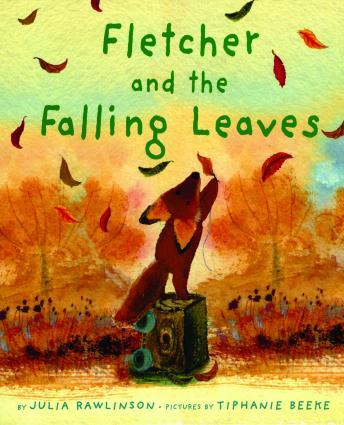
Image result for fletcher and the falling leaves

I use this book as a read aloud that is focused on the changes that occur in nature at this time of year.  In this book, Fletcher becomes concerned about a tree that is losing leaves.  He is worried that the tree is sick.  Fletcher tries to help the tree keep its leaves, until at the end of the story, Fletcher wakes up to see the tree glistening and covered with frost.  He appreciates the beauty of the tree, even without its leaves. 

From there, my students will read a short nonfiction passage that explains the science of the changing colors and falling of leaves in autumn.  We are working on the good reader strategy of "visualizing" so we will create mind movie sketches beside each paragraph.  Then we will work on answering text dependent questions that correspond to the reading.  


Then we will work on answering text dependent questions that correspond to the reading.  Students will color in the leaf beside each question and will dig back into the text to locate the answer.  They will underline the answer in the passage with the corresponding color. This one step makes them accountable for actually going back to search out the answer instead of just taking a guess!

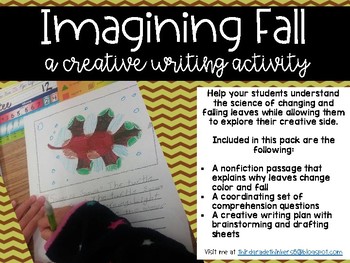
Next we let our creative juices flow as student try to reimagine a leaf as something else. 
They are given a leaf shape cut from construction paper. They glue it down onto the writing paper and transform it into another object. 

This becomes a writing activity which is a favorite of mine and all the kids I've done it with. 
It is so fun to see what these "leaves" will become!


Students meet with a partner to tell their story to.  This is called their "oral rehearsal".  Allowing kids to talk out their story first is a great help to my little writers. 

Students were responsible for writing a scene in which their object or character would be described. 

We had the best time reading and sharing these!

I've added this file to my TPT store. 
Click the link below if you are interested in checking it out...


Falling Leaves: Science Reading and Creative Writing

Sunday, October 14, 2018

Problem Solving with Part Part Whole Boxes

Problem solving and real world application of math thinking is a huge component of our math standards these days.  My kids need tons of ongoing practice in this area.  Visualizing the math is a big part of what we are focusing on.  I love using part/part/whole boxes as part of this process. They allow students to see the relationship between a number and its component parts. This helps my students generalize the connection between addition and subtraction.  

For this activity, I included paper manipulatives to help students SEE the math even more clearly. 
Students are given a part/part/whole mat along with a sheet of problems like the ones below. 


Students cut out the paper manipulatives before starting the problems. 


Students read the problems and use the manipulative within the part/part/whole box. 
Some problems require students to combine the two parts to determine the sum. 


While other problems supply the students with the whole and one part. Students begin by placing all their counters in the whole and then they move some into one of the part boxes.  
This allows them to "see" the missing number. 


I like using these problem sheets, mats and manipulatives during my small group guided math time. 
This allows me an opportunity to watch students as they work.
I can "coach" them as they problem solve. 


It is times like these that I really get to know what my students know. 


I have added these to my Teacher Pay Teacher store. 
Click the link below to check it out....